Monday, May 13, 2013

Man travels 6,000 miles for procedure at Overlake


By KEEGAN PROSSER
Bellevue Reporter Staff Writer
MAY 1, 2013 · UPDATED 1:23 PM 
KEEGAN PROSSER, BELLEVUE REPORTER
Maria Escalona laughs with her husband, Eduardo Engler, after he underwent his second atrial fibrillation ablation surgery at Overlake Medical Center on Friday, April 26.

The cardiology department at Overlake Medical Center has long been recognized as one of the most prolific in the country, but this month, the team stepped into the international arena, when patient Eduardo Engler traveled more than 6,000 miles from his home in Osorno, Chile, in order to undergo a procedure called atrial fibrillation ablation.

The procedure, the second of which Engler has received from Overlake's Dr. Rodrigues, took place on Friday, April 26.

Engler underwent his first atrial fibrillation ablation procedure in 2005, after several attempts to cure his irregular heartbeat using medication failed. Engler was connected with Dr. Rodrigues through his own research, as well as through a suggestion by his wife's family, who were living on the Eastside at the time.

Dr. Rodrigues said arrhythmias like Engler's can be caused by a number of things: coronary artery disease, Electrolyte imbalance and changes in your heart muscle or injury from heart attack, among them. While some people feel no symptoms, others, like Engler, may feel fatigue, lightheadedness/dizziness and changes in mood.

Although Engler's heart responded well to the first surgery - and he was able to return to work on his ranch, as well as fly helicopters - Engler started experiencing a recurrence of symptoms earlier this year. Not interested in relying on medication, he sought Dr. Rodrigues' help once again.

Dr. Rodrigues said 10-15 percent of patients who undergo this procedure may require a second operation. And though Engler's recurrences weren't severe, it was something they wanted to be proactive about.

"It wasn't really bad, but he doesn't tolerate medications," Dr. Rodrigues said.

Due to the significant advancements in the last eight years, as well as an increase in experience, he feels confident this procedure will provide a complete cure for Engler's condition.

Dr. Rodrigues said it's important to note he doesn't do these surgeries on his own. In fact, he's been working with a team of surgeons since 2001, when he and Dr. J. Alan Heywood felt advances in technology made the surgery more accessible to achieve. They've since completed more than 1,000 atrial fibrillation ablation procedures at Overlake.

"When Eduardo gets into a helicopter - the way he knows when to take off and land safely is because he is supported by an excellent crew…and that's no less true of what I do," Dr. Rodrigues said. "I couldn't do what I do if I wasn't as well supported as I am."

Friday's surgery seemed to be a big success, as Engler was already showing signs of feeling better.

"It's a new life for me," Engler said.

In addition to continuing his duties at the Arhythmia Center at Overlake, Dr. Rodrigues will also begin seeing patients at Overlake's Kirkland Clinic starting May 8.

Contact Bellevue Reporter Staff Writer Keegan Prosser at kprosser@bellevuereporter.com or 425-453-4602.

WGU: Online University Financial Aid


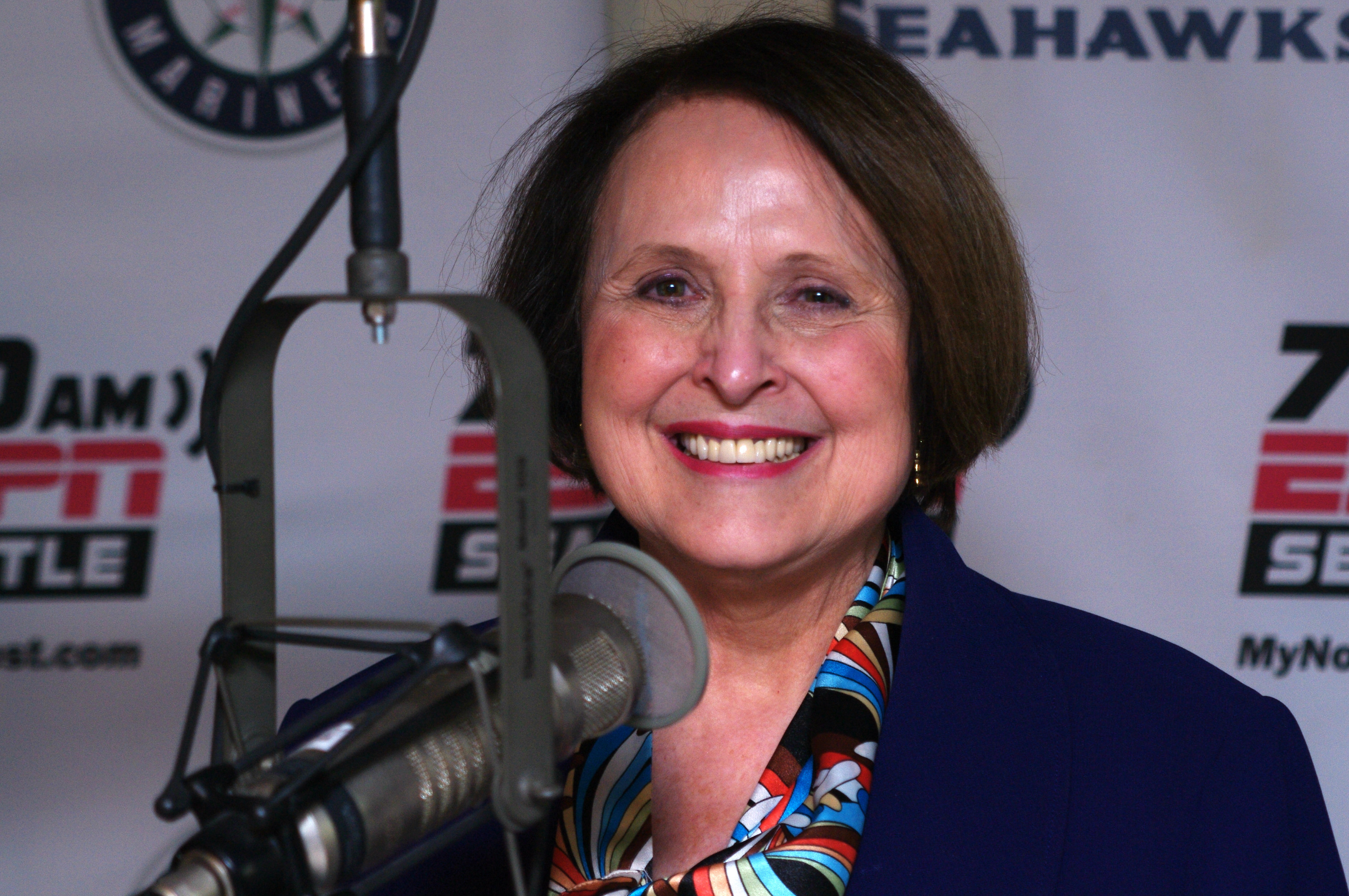
Good Morning Northwest: Interview with Jean Floten (WGU)


GeekWire Radio: How data, technology and analytics are reshaping education-WGU


Our topic this week on the GeekWire radio show: The future of education, and how technology is changing the experience of learning in the classroom and at home.
Joining me as guest host is Frank Catalano, the GeekWire columnist who works as aneducation technology consultant. He’s just back from a trip to SXSWedu in Austin, where he covered Bill Gates’ talk to the conference. Our opening news roundup covers some of the highlights from that talk, including the use of computerized “learning analytics” to understand a student’s progress and personalize their lessons, with an instructor as a guide.
Jean Floten, WGU Washington chancellor, joins us in the studio to talk about online learning. (Erynn Rose Photo.)
Our guest is Jean Floten, the chancellor of WGU Washington, the nonprofit online university that is part of the larger Western Governors University, recently named one of the most innovative companies of 2013 by Fast Company. Floten joins us starting in the second segment, explaining how WGU Washington applies many of these same principles, including learning analytics and personal mentoring, to its online courses, which are targeted in large part to mid-career adults.
“I just love this moment in time in higher education,” Floten says, describing this era as a renaissance for learning.
But is online learning for everyone? A recent New York Times opinion piece, the Trouble with Online College, highlighted the larger dropout rate for online courses for community college students, in particular.
Floten, who led Bellevue College before joining WGU Washington, has a unique perspective on the topic — informed in part by the analytics that WGU uses to track student progress.
“We have learned a lot about who is successful, and online learning is not for everyone,” she says. “For instance, we want to make sure a student has already had some college. We want to make sure that they’ve had experience with online learning. They need to be an incredibly self-motivated and independent achiever. Even though it is mentor-supported, you really need students that are disciplined enough to get through a curriculum."

Kirkland publisher ranks WGU as top online school


A Web publishing company that rates online colleges and universities says Western Governors University is the nation's top-performing online school.
Seattle Times higher education reporter
Its ad campaign pops up on TV and online, and its enrollment in Washington has quadrupled in 18 months.
Now, Western Governors University (WGU) has gotten a top ranking from a Kirkland publishing company, which calls it the best online school in the nation.
The No. 1 ranking comes from SR Education Group, an online publishing company started by a former Microsoft executive, which uses a combination of measures — including reputation among former students, affordability, and graduation and retention rates — to create the ranking of online higher-education institutions.
Geared mainly toward working adults, the school was founded in 1997 by the governors of 19 Western states, including Washington.
A private, nonprofit school, it's based in Utah but has a Washington tie. In 2011, the Legislature created a partnership between Washington and WGU, allowing it to be included in agreements for the transfer of college credits among Washington institutions. It does not receive any state money.
The state recognition led WGU to form WGU-Washington and hire Jean Floten, former president of Bellevue College, to be its chancellor.
Since June 2011, WGU's Washington enrollment has grown from 979 students to 4,012 today. Washington students make up about 10 percent of WGU's national enrollment of 38,479.
SR Education Group CEO Sung Rhee, a former Microsoft executive, said the schools that ranked highly on the company's list are geared to nontraditional students — students who are already in the workforce and looking to enhance their careers.
The rankings are based on about 4,000 online reviews from former students, and each one was read and approved by SR Education to make sure no one is trying to game the system, he said. The ranking also takes into account retention and graduation rates, which are culled from a federal college-data collection system.
Floten said she thinks WGU is earning a strong reputation because it provides one-on-one mentoring, the price is low — tuition is $5,780 a year — and it offers programs that are relevant to the workplace.
"It really is an amazing option for working adults," Floten said. "One of the features I love about it is it really does meet their schedule and their needs."
Although WGU did well overall on its rankings, the online reviews from students on the SR website are mixed. Some students said the program was "quite rigorous" and "a perfect fit," while other reviewers called it a "degree mill" or complained that curriculum and support were lacking. There are 101 student reviews posted for WGU, and 75 percent recommended the school.
SR Education Group has been providing the online guide since 2004. It only recently began ranking online schools for quality. No other schools with a Washington connection made the top-10 list.
Rhee said the website is free, funded by advertising, and the rankings are "completely done by us, without input from anybody."
Katherine Long: 206-464-2219 or klong@seattletimes.com. On Twitter @katherinelong.

Thursday, February 14, 2013

My dear friend, Sue Nixon and our wonderful Keller Group client, Medic One Foundation, combined today to make a heart-warming Valentine's Day story in the Seattle Times.  It is a stark reminder that everyday is precious!  Happy Valentine's Day and Sue, we're very grateful you are here to celebrate with us!

Heart-attack survivor marks special Valentine’s Day in 2007

Six years ago today, Sue Nixon was brought back to life after going into cardiac arrest.
Seattle Times staff reporter

-----------------------------------------------
 
Sue Nixon left her Lake Union home on Valentine’s Day six years ago feeling good about her new job and confident in her Dolce & Gabbana overcoat.
Three minutes later, she was unconscious, her coat torn off as two passers-by performed CPR to keep her heart beating.
Nixon had suffered a cardiac arrest, and for almost 10 minutes her heart fluttered, unable to pump blood on its own. An off-duty nurse, a letter carrier and some luck kept her alive until paramedics arrived.
“I didn’t used to care about Valentine’s Day,” Nixon said. “But I’ve reclaimed it back.”
Nixon was driving down a residential street when she lost consciousness, causing a minor accident. The nurse, who had unexpectedly gotten the day off, and the postal worker, who was on his route through the neighborhood, rushed to her aid.
Nixon, now 47, says she owes it to others to share her story. On Tuesday she spoke at a welcome lunch for the 39th class of the UW Paramedic Training Program.
The program, funded by the Medic One Foundation, is one of the most rigorous in the country, and is one reason Seattle has among the highest survival rates in the world of people who suffer cardiac arrest, said Jan Sprake, the foundation’s executive director.
It also may be one reason paramedics were able to keep Nixon alive for so long. Medical rule of thumb says that Nixon’s chances of survival dropped 5 percent for every minute her heart continued to tremor, Sprake said.
Instead, she made a full recovery.
“It was not my day to die,” Nixon said. “So all these things came together.”
On Feb. 14, 2007, Nixon was walking out the door to a Rotary Club meeting when the phone rang. Although answering the call would make her late, she decided she could spare five minutes.
That short delay led her to be on a quiet residential street, rather than home alone or on the highway, when she lost consciousness.
Cathy Butler, the nurse, was on her way to get a cup of coffee when she saw Nixon’s car unexpectedly swerve, and Michael Sabye, the letter carrier, was on his route nearby.
At the time of her cardiac arrest, Nixon had been running her own branding and marketing firm out of her floating home. She started the firm three months earlier, trading in a high-stress CEO post at a large creative company called Fitch in favor of wood rafters, the water and her music.
She sings in a Steely Dan cover band and her bandmates learned of her medical emergency after she failed to show up at a performance that Valentine’s Day evening.
When she awoke 36 hours after the incident, doctors told her that her more relaxed lifestyle would allow her to make a full recovery.
Nixon now has a defibrillator that shocks the muscle into behaving when it starts to flutter again.
She celebrates Valentine’s Day each year by performing at Serafina with her band, marking the performance she missed that day six years ago.
She also hosts an annual dinner for her friends, family, Sabye and Butler, hoping to keep their lives connected.
And she hangs her tattered Dolce & Gabbana coat on her closet door for the week. “It just reminds me of how quickly things in this world just, in a blink, are gone,” she said. “And how that afforded me to be here.”
Sarah Freishtat: 206-464-2373 or sfreishtat@seattletimes.com

Wednesday, February 6, 2013

Obama to name REI President and CEO secretary of interior


 Sally Jewell, President and CEO of REI. Photo courtesy of The Seattle Times' Cliff Despeaux.

Today The Seattle Times is reporting that President Obama will nominate REI President and CEO Sally Jewell later today as his choice for secretary of the interior, and I couldn't be happier! I've known Sally personally for many years and have enjoyed sailing with her and traveling to Washignton, D.C. as part of the Initiative for Global Development team, where we were lobbying the then-Bush administration on world poverty issues.  Jewell was named CEO of REI in 2005 and has spent more than 20 years of her career in banking. REI is a nearly $2 billion-a-year company and is consistently rated as one of the premier places to work in the United States. This nomination was fresh, out-of-the-box thinking and we give Sally our wholehearted congratulations!
Lee


Read The Seattle Times' full article here.